2026-09-01 カリフォルニア大学サンディエゴ校(UCSD)

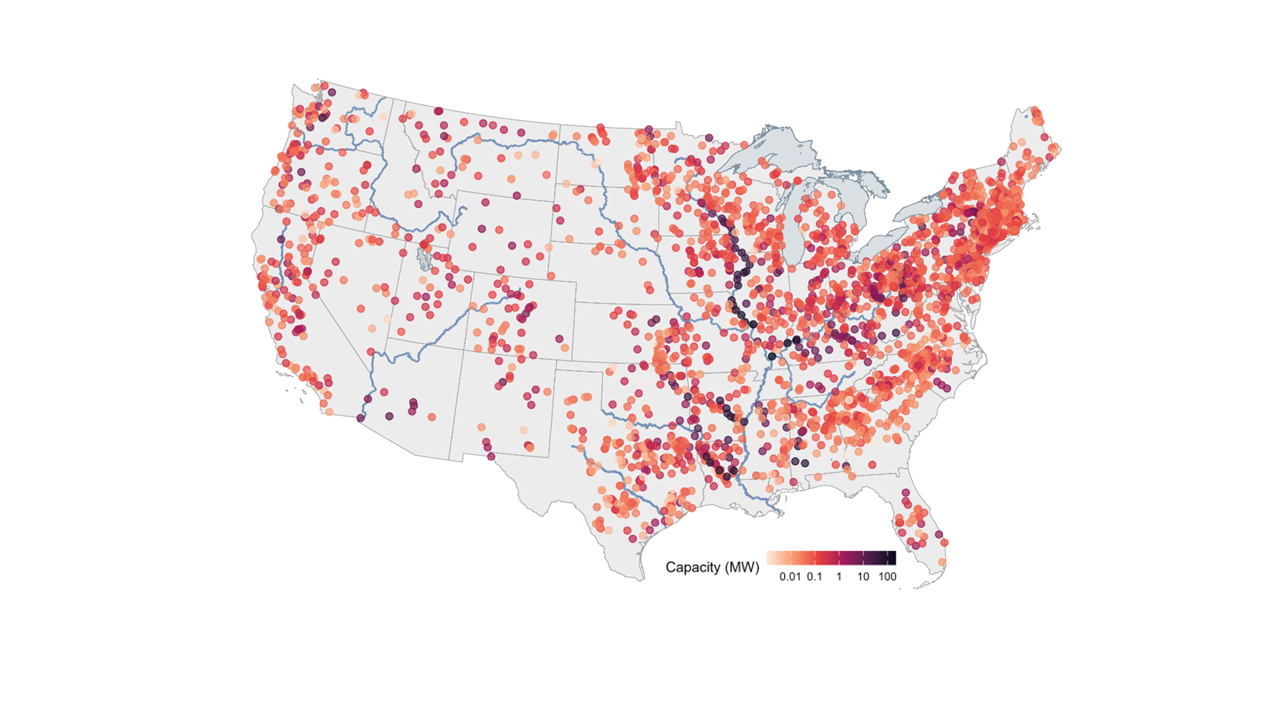
Map of possible FIRO reservoirs in California
<関連情報>
- https://today.ucsd.edu/story/study-reservoir-management-system-could-save-california-150-million-every-year
- https://iopscience.iop.org/article/10.1088/3033-4942/ae949f
カリフォルニア州における予測に基づく貯水池運用(FIRO)による農業用水および都市用水の潜在的な経済的価値 The potential economic value of agricultural and urban water from forecast informed reservoir operations (FIRO) in California
Thomas W Corringham, Denali M Pinto, F Martin Ralph, Jason Cordeira, Arleen O’Donnell and Josué Medellín-Azuara
Environmental Research: Water Published: 1 September 2026
DOI:10.1088/3033-4942/ae949f
Abstract
Water systems across California and the western United States face intensifying pressure from increasing hydrologic variability, declining snowpack, groundwater regulation, and sustained urban, agricultural, and environmental demands. Forecast informed reservoir operations (FIRO) is an emerging national adaptation strategy that leverages advances in hydrometeorological forecasting to allow more flexible reservoir operations, enabling operators to safely retain additional water while maintaining or enhancing flood risk management. In California, the potential economic value of the urban and agricultural water-supply benefits of FIRO implementation is evaluated for 20 major reservoirs identified by the U.S. Army Corps of Engineers as having no prohibitive barriers to further viability assessment. Collectively, these reservoirs represent over 20.1 million acre-feet of capacity. Using historical storage records, we estimate the volume of water that could have been retained under FIRO, yielding an increase in water availability of approximately 315 000 acre-feet per year, up to ≈500 000 acre-feet in wet years. Under these assumptions, we project that FIRO could generate approximately $145 million per year in direct economic benefits to urban and agricultural water users. Estimated annual benefits are highest in hydrologically moderate water years ($206 million) and lower in dry and wet years ($100 million and $134 million, respectively). Estimates are supported by two separate valuation frameworks combined with a statistical analysis of the Nasdaq Veles NQH2O California Water Index. These results account only for direct urban and agricultural water-supply benefits and exclude potential gains from flood risk reduction, environmental flows, hydropower, and recreation, and therefore represent only one portion of FIRO’s total economic value.