2026-09-29 パシフィック・ノースウェスト国立研究所(PNNL)
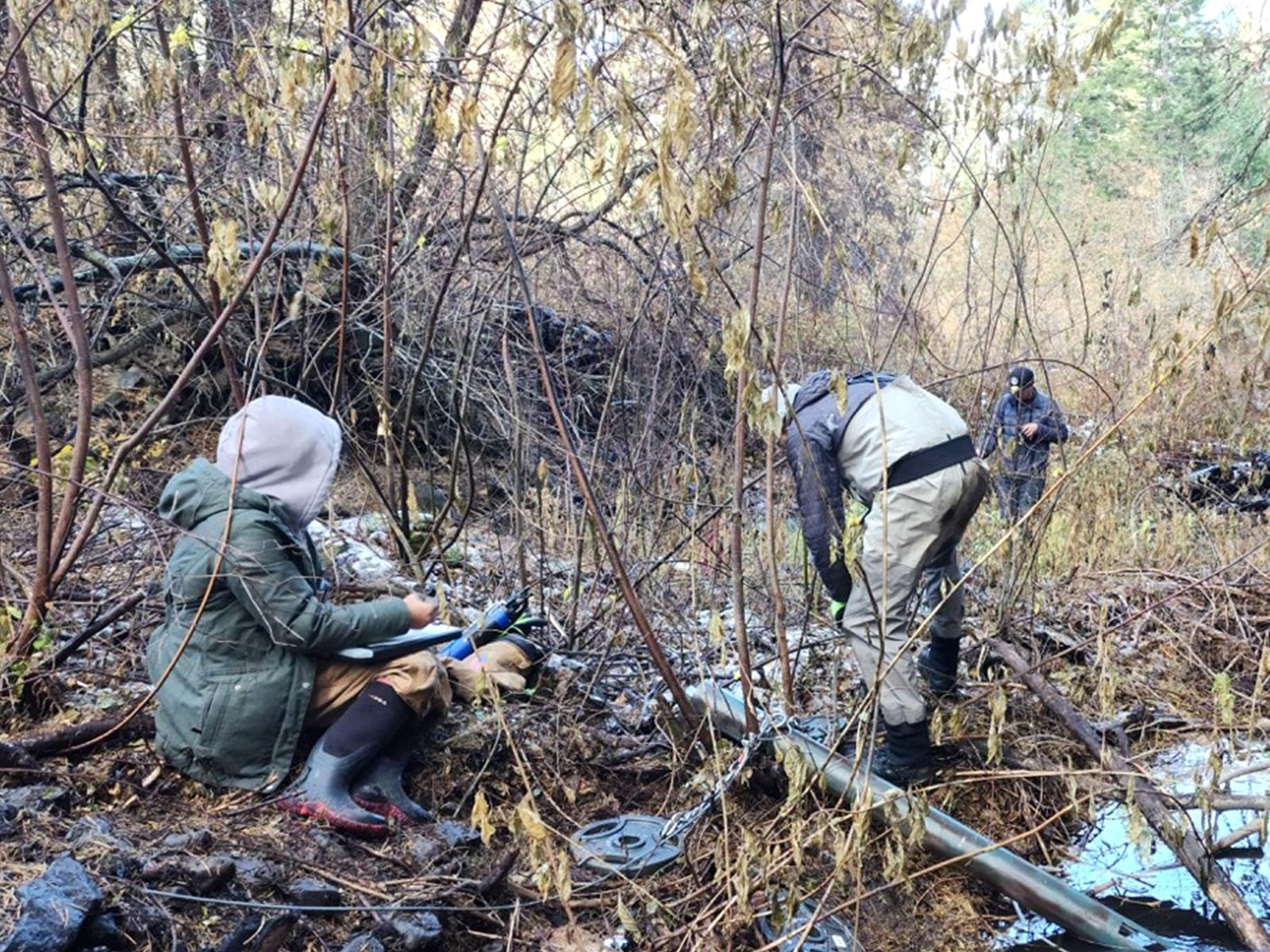
Scientists from the River Corridor Science Focus Area at Pacific Northwest National Laboratory collecting samples from the Oak Creek Watershed after the Retreat Fire occurred in July 2024. (Image courtesy of Sophia McKever | Pacific Northwest National Laboratory)
<関連情報>
- https://www.pnnl.gov/publications/modeling-water-movement-after-wildfires-pacific-northwest-watersheds
- https://www.sciencedirect.com/science/article/pii/S0022169425018785
完全分布型統合水文モデルを用いて、火災後の流域の火災強度と降雨パターンの変化に対する応答を評価する Evaluating post-fire watershed response to varying burn severity and precipitation regimes using fully-distributed and integrated hydrologic models
Zhi Li, Bing Li, Peishi Jiang, Glenn E. Hammond, Pin Shuai, Faria T. Zahura, Ethan T. Coon, Xingyuan Chen
Journal of Hydrology Available online: 14 November 2025
DOI:https://doi.org/10.1016/j.jhydrol.2025.134538
Highlights
- The fire-caused soil hydraulic property changes are parameterized using burn severity products and are incorporated into the integrated hydrologic model.
- High burn severity wildfires cause decreased infiltration and increased peak flows during the first post-fire precipitation event.
- More intense post-fire precipitation events induce a larger increase of the peak flow discharges due to the soil water repellency effect.
Abstract
Wildfires can cause substantial changes in vegetation and soil, affecting water cycling within ecosystems. This study uses the Advanced Terrestrial Simulator (ATS), an integrated and fully distributed hydrologic model at the watershed scale, to examine post-fire hydrologic responses in watersheds with varying burn severities in the Pacific Northwest region of the United States. The model integrates surface overland flow, groundwater flow, and canopy biophysical processes. We developed a new fire module in ATS to account for changes in soil hydraulic properties caused by fire in the topsoil layer. Modeling results show that, in the year following a high-severity burn, watershed-averaged evapotranspiration decreases by about 25%. Post-fire peak flows increase by 18%–29% in watersheds affected by moderate to high burn severity, while low-severity burns produce almost no change in peak flows. High-severity fires also reduce infiltration rates within the affected watershed during the first post-fire wet season. Numerical experiments with varying precipitation regimes after a high-severity burn indicate that peak flows can rise by as much as 29%. These findings underscore the importance of using fully distributed hydrologic models to quantify hydrologic disturbance–feedback loops.