
2026-06-05 中国科学院(CAS)
◆研究では6,000超の実測データと物理法則を組み込んだ機械学習モデルを用い、約5分の1の貯水池で急速な容量減少が進行していると推定した。特に米国南西部、中東、西オーストラリアなど乾燥地域でリスクが高い。さらに、世界の灌漑農地の約4分の1が高い堆砂リスクにさらされ、20億人以上の水・食料安全保障に影響する可能性がある。対策が講じられなければ、2060年までに世界の貯水池の半数超で機能低下が生じると予測されている。
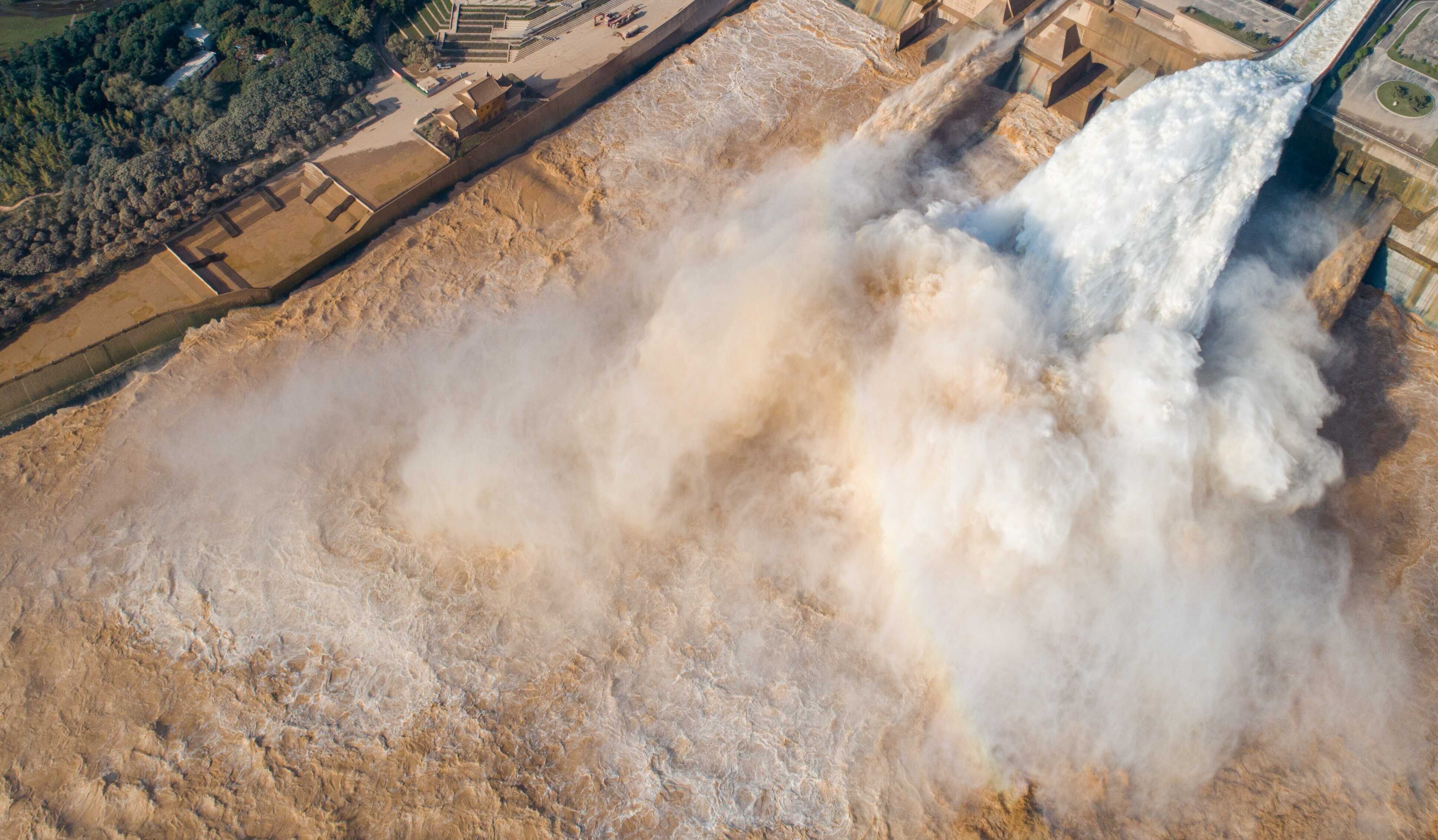
Regular sediment flushing at Xiaolangdi Reservoir helps maintain storage capacity. (Image by DONG Baohua)
<関連情報>
- https://english.cas.cn/newsroom/research-news/202606/t20260603_1161043.shtml
- https://www.nature.com/articles/s41893-026-01859-y
貯水池の堆積に関する世界的なパターンと、小規模貯水池で見過ごされているリスク Global patterns of reservoir sedimentation and overlooked risks in small reservoirs
Kai Liu,Chenyu Fan,Chunqiao Song,Jim Best,Jida Wang,Linghong Ke,Yoshihide Wada,Dongfeng Li,Dai Yamazaki,Anjun Deng,Jiaming Na,Md Safat Sikder & R. Iestyn Woolway
Nature Sustainability Published:05 June 2026
DOI:https://doi.org/10.1038/s41893-026-01859-y
Abstract
Reservoir sedimentation is an escalating threat to global water security. While most existing assessments focus on large, well-managed reservoirs, they overlook the vast and vulnerable network of smaller reservoirs, which hampers our understanding of global sedimentation risks. Here we present a high-resolution global assessment of reservoir sedimentation in over 550,000 reservoirs, ~95% of which are <1 km2, based on a physics-guided machine learning model and a comprehensive reservoir inventory. Sedimentation rates have been underestimated in over 75% of reservoir-bearing regions when large reservoirs alone are considered. This oversight conceals a loss in global average reservoir water storage of 7.3% ± 2.8% per decade, with nearly one in five reservoirs now facing high-risk status. We identify 16 global high-sedimentation hotspots across the Western Americas and Afro-Eurasian Sediment Belts, threatening water supplies to over 2 billion people and impacting ~26% of global irrigated land. Without intervention, we project that, by 2060, more than half of all reservoirs could become functionally inoperable, including 58.6% of small and 38.1% of large reservoirs. These findings highlight an urgent need for targeted, nature-based sediment management, particularly in dryland regions, where small reservoirs are critical for domestic water access and food production.

