
2025-10-09 スイス連邦工科大学ローザンヌ校(EPFL)
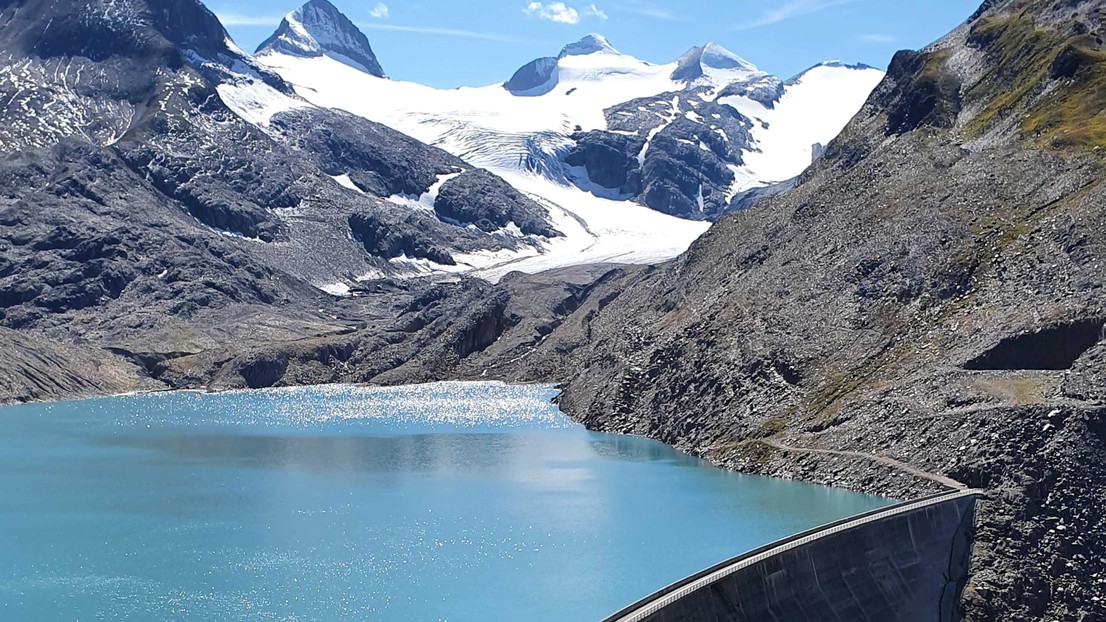 The Gries glacier and dam in 2020. © Andrea Baumer
<関連情報>
- https://actu.epfl.ch/news/in-the-future-dams-will-serve-a-variety-of-purpose/
- https://agupubs.onlinelibrary.wiley.com/doi/10.1002/9781394216727.ch4
気候変動による高山の水力発電用貯水池の堆積:最初に消滅するのは氷河か、貯水池か? Sedimentation of a High Alpine Hydropower Reservoir Under Climate Change: What Will Disappear First, the Glacier or the Reservoir?
Giovanni De Cesare
AGU Books Published: 26 September 2025
DOI:https://doi.org/10.1002/9781394216727.ch4
Summary
Glacier retreat in the Alps has progressed dramatically since the 1980s as a result of climate change and will be even more pronounced in the future. Consequently, flow regimes and sediment yield from watersheds will change significantly. Reservoirs are exposed to continuous sedimentation, reducing storage volume and posing exploitation and security risks. This chapter is primarily based on a literature review of the Gries watershed (currently mostly glacier-covered above 2,400 m asl), including the reservoir, glacier, and dam. The length of the Gries Glacier has been recorded since 1847, and annual mass balance data have been available since 1961. Future glacier evolution models, coupled with a hydrological model that considers global warming, predict that the length of the glacier will continue to decline, such that by around 2060, the entire catchment will be virtually glacier-free. Runoff and erosion will shift to a pluvio-nival regime, and associated water resources will become less reliable. Past surveys of sediment yield and reservoir sedimentation allow the characterization of reservoir sedimentation patterns, which are dominated by plunging turbidity currents. Sustainable sedimentation management measures will preserve the reservoir’s storage volume, safety, and economic operability beyond the disappearance of the glacier.

