2026-07-29 北京大学(PKU)
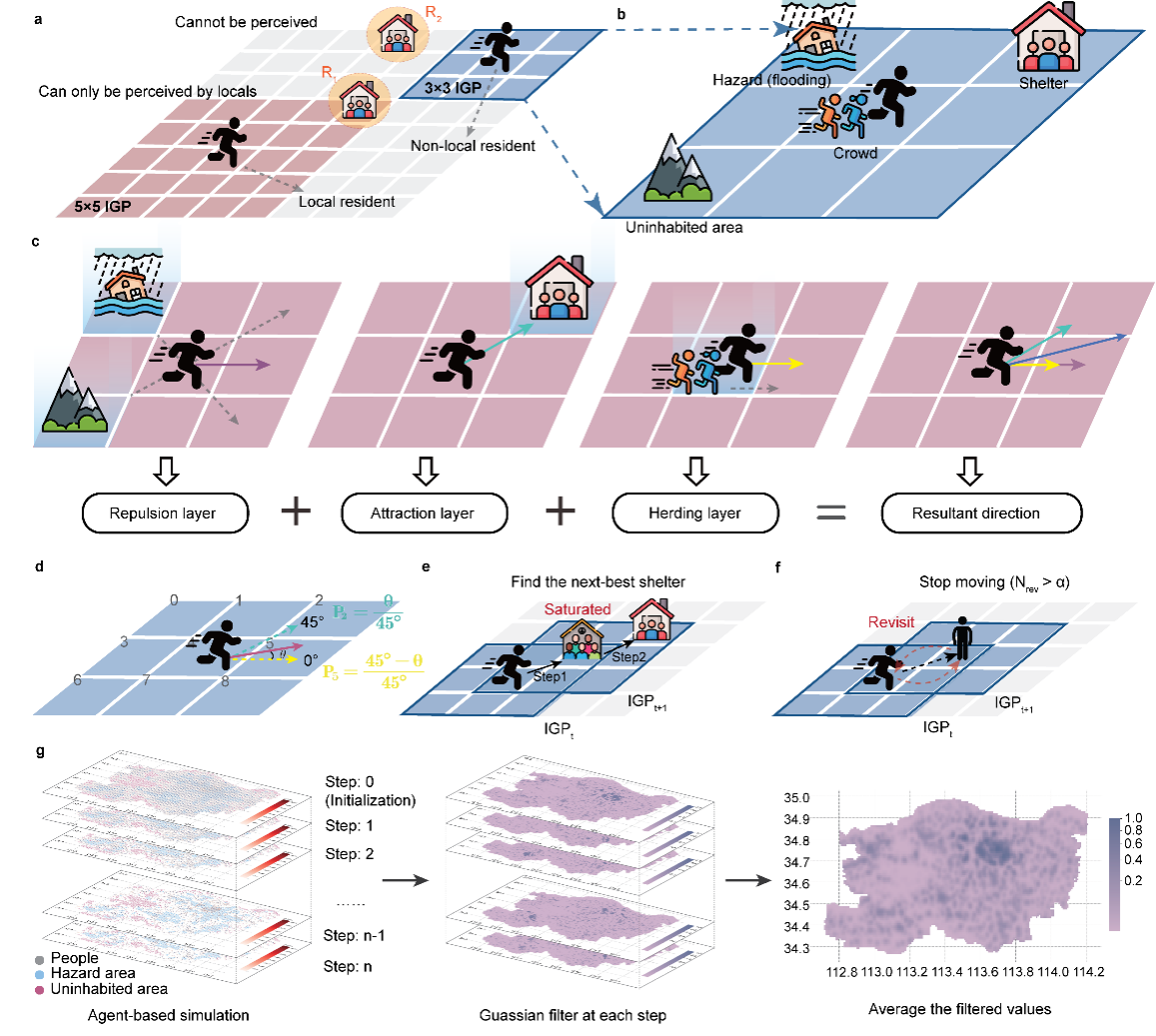
Figure 1. Schematic overview of the developed ABM.
<関連情報>
- https://newsen.pku.edu.cn/news_events/news/research/15627.html
- https://www.nature.com/articles/s41893-026-01886-9
洪水緊急時の費用対効果の高い資源配分のための人的移動ダイナミクス Human mobility dynamics for cost-effective flood emergency resource allocation
Junqing Tang (汤俊卿),Wei Lyu (吕薇),Pengjun Zhao (赵鹏军),Fengjue Huang (黄沣爵),Jiaying Li (李嘉颖),Chao Fan (范超),Qiuchen Lu (吕秋晨),Jing Wang (王婧),Lingzhi Ye (叶凌志) & Zengjun Guo (郭增骏)
Nature Sustainability Published:14 July 2026
DOI:https://doi.org/10.1038/s41893-026-01886-9
Abstract
Extreme flooding displaces millions of people annually worldwide. However, emergency resources are often inefficiently allocated, as conventional strategies usually overlook mobility dynamics and thereby exacerbate vulnerability. Here, by capturing flood-induced human dynamics using agent-based modelling, we investigate the emergency resource allocation issue (official emergency shelters and dual-use public service facilities) across China’s 21 large cities. We find that 43% of these cities face notable resource demand‒supply mismatches (>2,000 km2 per city) during 100-year floods, exposing 16.76 million residents to preventable risks. Our SSP5-8.5 projections indicate that substantial mismatch will persist by 2050 despite the declining population in China, while flooded areas are expected to expand fivefold owing to climate change. As a solution, strategically retrofitting 30% of high-deficit zones yields benefit-to-cost ratios exceeding 28 via reduced mortality, societal co-benefits, carbon savings and economic continuity (US$0.20–3.05 billion savings per city with a per capita investment of merely US$1.39). These findings underscore the critical links between flood-induced human behaviour and emergency resource optimization in climate-adaptive urban development.