2026-09-16 ペンシルベニア州立大学(Penn State)
<関連情報>
- https://www.psu.edu/news/research/story/recycled-concrete-aggregate-may-help-treat-acid-mine-drainage
- https://link.springer.com/article/10.1007/s10230-026-01142-8
酸性鉱山排水(AMD)の受動的処理における中和剤としての2種類の骨材廃棄物の潜在的な有益な利用 Potential Beneficial Use of Two Aggregate Waste Products as Neutralizers of AMD in Passive Treatment
Allison Fenske & Nathaniel Warner
Mine Water and the Environment Published:11 September 2026
DOI:https://doi.org/10.1007/s10230-026-01142-8
Abstract
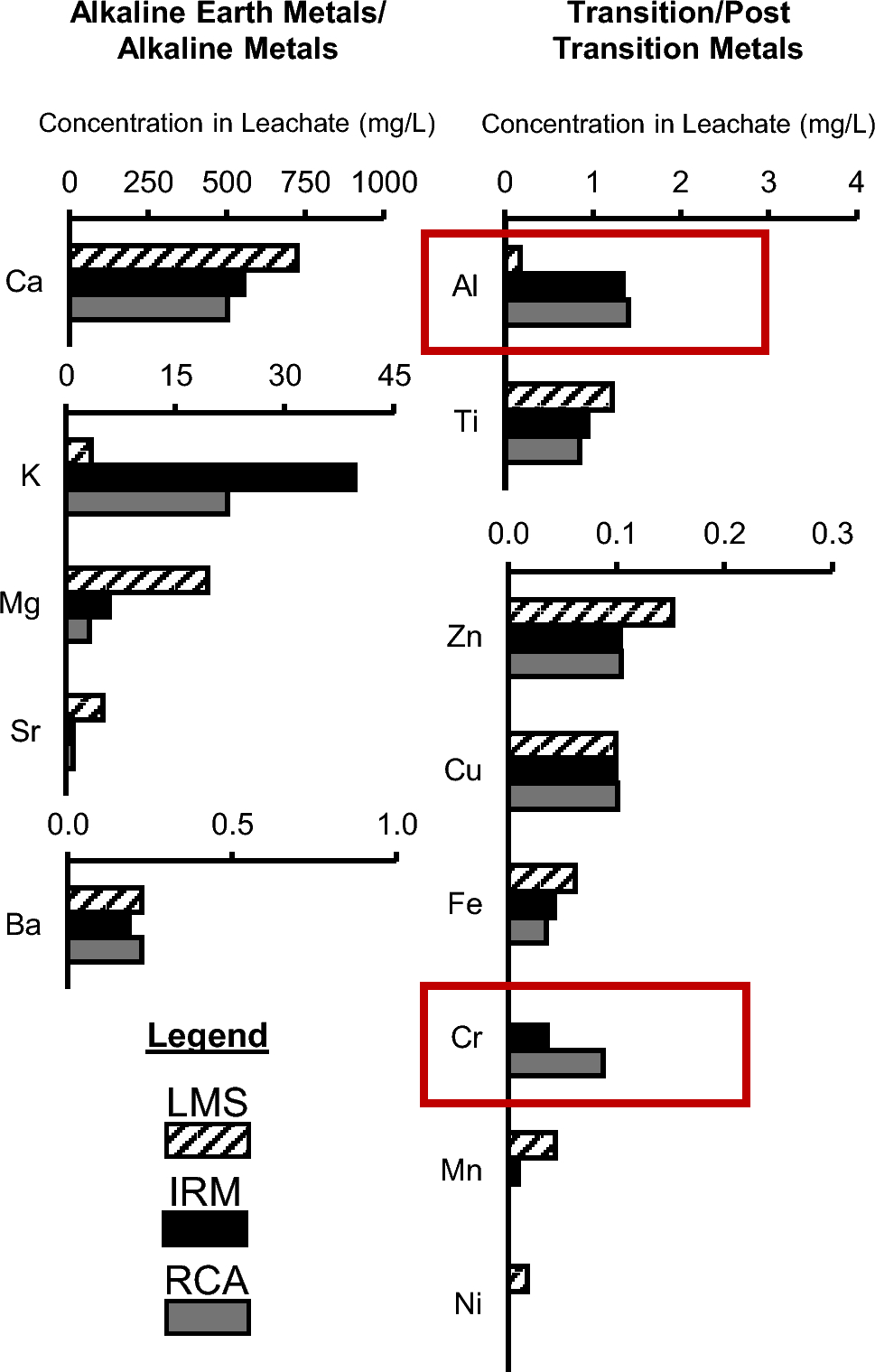
Two alternative neutralizers derived from waste products, recycled concrete aggregate (RCA) and iron-rich material (IRM) from steel production, were evaluated for their potential use in passive treatment of AMD. They were compared directly against limestone (LMS) in three types of experiments: calcium carbonate equivalence, batch reactor interval bucket tests, and plug flow reaction columns. The interval bucket tests and column tests utilized aggregate that was ≈ 5 cm in diameter. A modified toxicity characteristic leaching procedure (TCLP) test showed that the IRM and RCA leached higher concentrations of aluminium and chromium than the LMS. The IRM had 58% and LMS had 93% calcium carbonate equivalence, while the RCA had less, ranging from 35 to 73%. In the interval bucket test, the RCA outperformed the IRM and LMS for pH neutralization, acidity removal, and alkalinity generation. During the column test, the IRM rapidly failed to neutralize the influent, while there was a steady decrease in the RCA’s neutralization capacity. The IRM and RCA both reduced the concentrations of aluminium and iron in the resulting effluent, but the IRM increased the concentration of manganese. The laboratory results were used to estimate parameters for calculating potential neutralizing capacity. Based on neutralization life, material acquisition, transportation costs, and environmental impact, we predict regions where RCA can potentially be used to treat AMD at a lower cost and less environmental impact than using LMS. The approach presented here could be applied to evaluate the use of alternative products to neutralize mine drainage in other regions.