2026-08-19 神戸大学
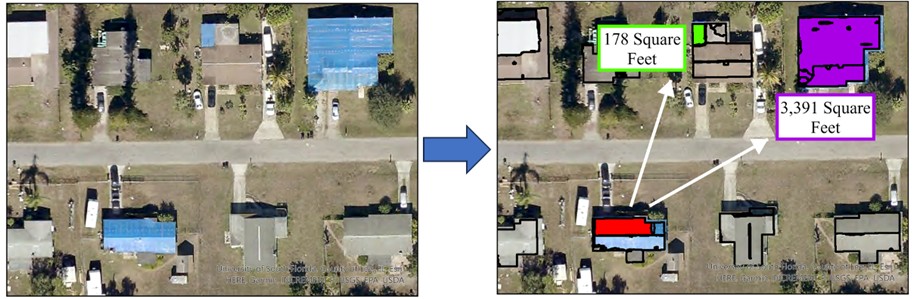
図:画像解析のイメージ。ドローン画像から色と形を領域分割によって解析し、ブルーシートであると判断された領域のRGB情報を用いて、画像全体に渡る被害予測を行う。神戸大学/David Wolf
<関連情報>
- https://www.kobe-u.ac.jp/ja/news/article/20260819-68194/
- https://www.aeaweb.org/articles?id=10.1257/pol.20240544
建築基準は風害への適応策として有効か?ドローン画像から解析したブルーシートによる検証 Are Building Codes an Effective Adaptation to Wind Risk? Evidence from Remotely Detected Blue Tarps
David Wolf,Kenji Takeuchi
American Economic Journal: Economic Policy Published: August 2026
DOI: 10.1257/pol.20240544
Abstract
Hurricanes cause significant wind and water damage, yet economic research primarily focuses on the latter due to data limitations. We overcome this problem by analyzing photographs taken after Hurricane Irma (2017 ) to locate blue-tarped homes. Using a regression discontinuity framework, we find the 2001 Florida Building Code impacted wind risk for over 500,000 homeowners. Adopters were 22 percent less likely to experience wind damage and saw a 27 percent reduction in damage severity. Unrepaired properties also sold for 13.3 percent ($29,400) less and were harder to sell, underscoring the importance of building codes in mitigating risk and promoting climate change adaptation.