2026-09-02 パシフィック・ノースウェスト国立研究所(PNNL)
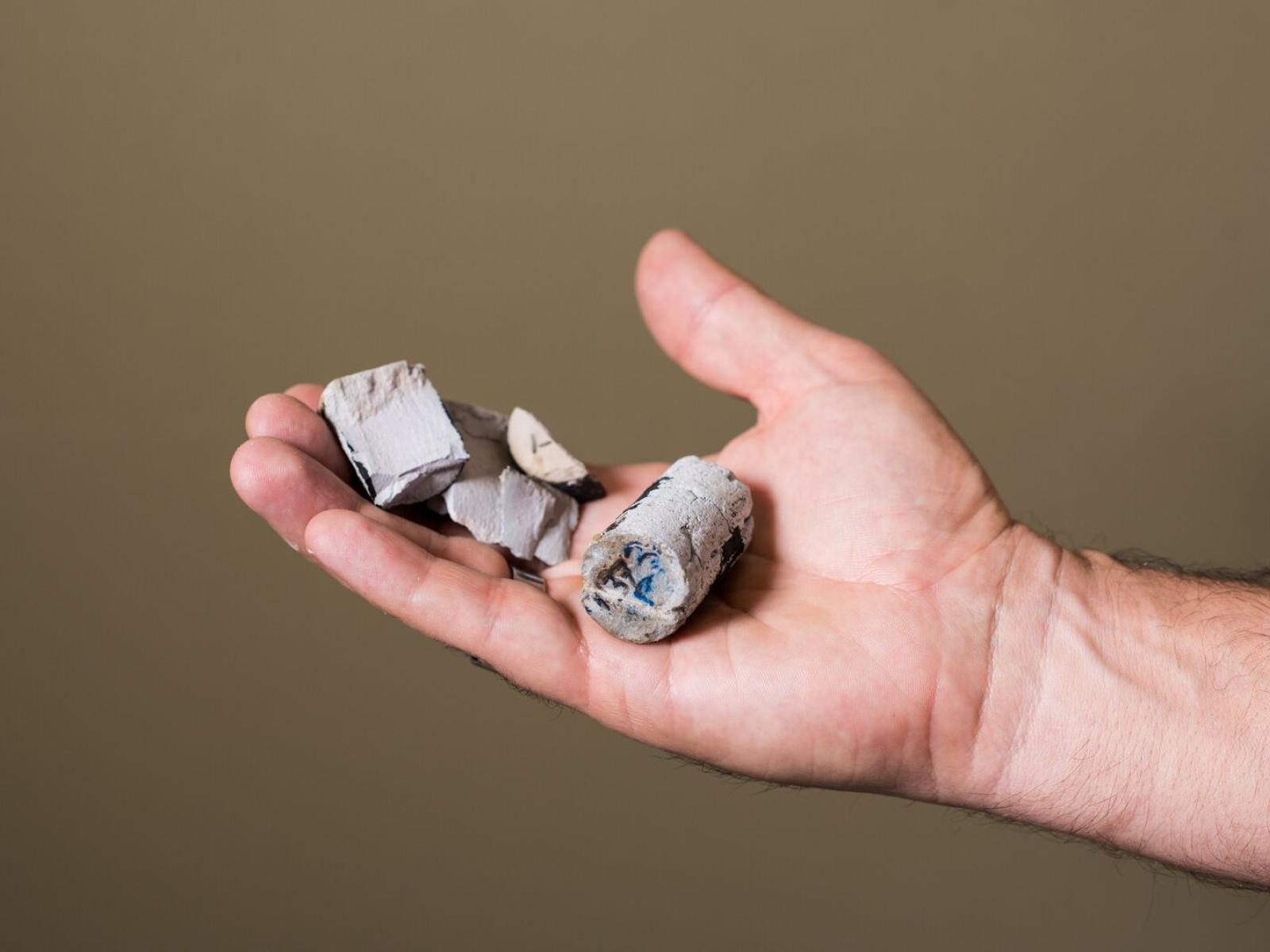
PNNL scientists are adding polymers to cement, creating self-healing and re-adhering properties that extend its lifetime and reduce the risk of failure. (Photo by Andrea Starr | Pacific Northwest National Laboratory)
<関連情報>
- https://www.pnnl.gov/publications/new-molecular-velcro-cement-heals-cracks-within-hours-and-could-help-concrete-last-far
- https://www.nature.com/articles/s41467-026-76061-x
分子ベルクロ式自己修復セメント A molecular velcro self-healing cement
Chao Zeng,Zihao Li,Trent R. Graham,Manh Thuong Nguyen,Robert G. Felsted,Xiaoxu Li,William B. Chrisler,Tamas Varga,Lan Li,Quin R. S. Miller & Carlos A. Fernandez
Nature Communications Published:01 August 2026
DOI:https://doi.org/10.1038/s41467-026-76061-x
Abstract
Cracking fundamentally limits the durability of cementitious materials, while most self-healing strategies rely on encapsulated agents or high additive loadings that restrict repeatability, scalability, or mechanical performance. Here we report a cement composite incorporating an ultra-low polymer concentration (<0.15 wt%) that enables autonomous, multi-cycle crack healing without capsules or vascular networks and with minimal impact on hydration, setting, or workability. The system forms an in-situ poly(acrylic acid)/poly(ethylene oxide)/branched poly(ethylene imine) complex that establishes reversible electrostatic and hydrogen-bonding interactions with both itself and cement hydration products, creating a molecular-scale “Velcro” network. High-resolution X-ray computed tomography and optical microscopy reveal rapid polymer redistribution and crack sealing, including closure through a ~ 2 mm-deep fracture within ~4 h, corresponding to healing rates of ~10 mm·day⁻¹. Time-resolved confocal Raman spectroscopy identifies bi-exponential kinetics with characteristic times of ~10 min and ~9 h, consistent with multi-stage polymer transport and interfacial reorganization, and corroborated by identical-location SEM–EDS observations. Mechanical testing under a severe post-peak loading protocol (20% strength loss beyond the maximum) shows strength recovery of up to 62% in compression and 59% in direct tension, with sustained recovery across multiple damage–healing cycles. These results demonstrate that reversible polymer–cement interactions coupled with efficient pore-scale transport enable rapid, repeatable self-healing at exceptionally low additive concentrations, providing a scalable pathway toward longer-lived and more sustainable concrete infrastructure.