2025-11-18 カナダ・コンコルディア大学
<関連情報>
- https://www.concordia.ca/news/stories/2025/11/18/concordia-researchers-model-a-sustainable-solar-powered-15-minute-city.html
- https://www.mdpi.com/2071-1050/17/18/8196
北米における15分圏都市の適応:都市農業とグリーンモビリティを備えた近隣クラスターの枠組み Adapting the 15-Minute City to North America: A Framework for Neighborhood Clusters with Urban Agriculture and Green Mobility
Md Faisal Kabir,Mahnoor Fatima Sohail and Caroline Hachem-Vermette
Sustainability Published: 11 September 2025
DOI:https://doi.org/10.3390/su17188196
Abstract
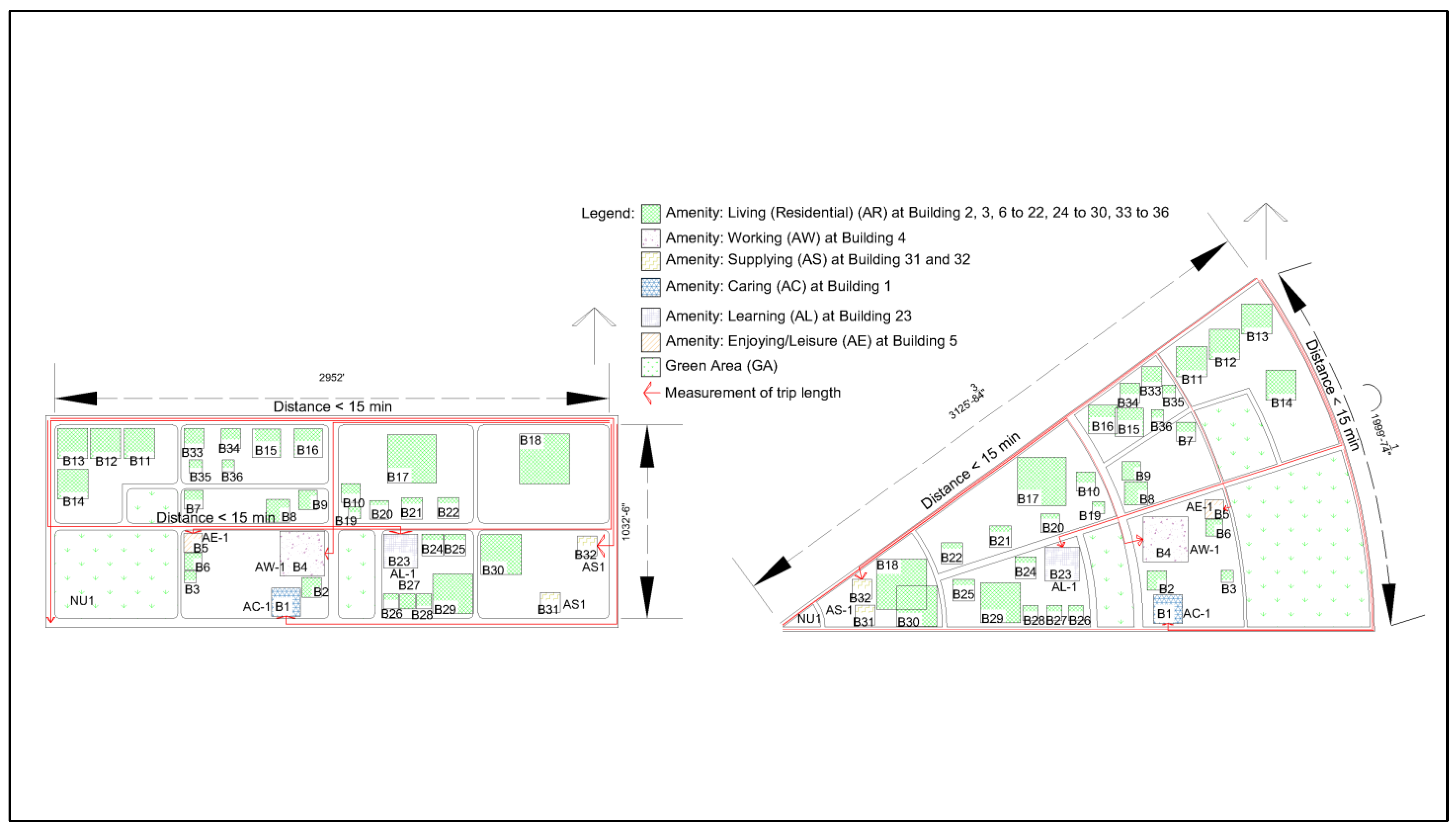
To reduce GHG emissions from food miles and enhance urban food security, this study develops and evaluates an integrated framework combining three strategies: the 15-minute city concept, urban agriculture, and a renewable-energy-powered green transportation (GT) system. The goal is to create a scalable, holistic approach to sustainable food production and distribution within neighborhoods. A Food Production and Transportation Framework is proposed, modeling vegetable cultivation across rooftops, facades, and lot spaces, with optimized allocations based on a tailored Food Production Schedule. The harvested produce is distributed via GT powered by sidewalk-integrated photovoltaics (PVs). Results demonstrate that using 15% of roof, facade, and lot spaces yields an achieved annual food self-sufficiency of 100%. The transportation system operates with a single GT unit powered by 98 m2 of sidewalk PVs, reducing CO2 emissions by 98% from the base case. Economic analysis indicates a payback period of 2.8 years, with the cost of PV-generated electricity estimated at C$0.92/kWh. This framework highlights that 0.19 units of local food production offset one unit of CO2 emissions. This integrated approach advances multiple UN Sustainable Development Goals (SDGs), including SDG 2 (Zero Hunger), SDG 7 (Affordable and Clean Energy), SDG 11 (Sustainable Cities and Communities), and SDG 13 (Climate Action).