2026-04-0+6 スタンフォード大学

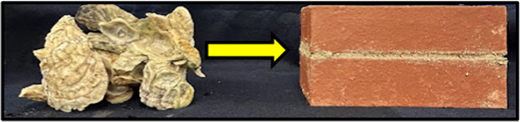
The Phlego manufacturing process is compatible with existing cement production methods. Pictured here are various stages of the process, from raw material (in the bag at left) to a cylindrical Phlego mortar sample that meets industry standards. | Mia Maria Pique
<関連情報>
- https://news.stanford.edu/stories/2026/04/sustainable-cement-carbon-emissions-phlego
- https://www.sciencedirect.com/science/article/abs/pii/S0950061820338162
多段階画像解析、強度および透水性測定:ローマ時代の海洋コンクリートの耐久性を理解する Multi-scale imaging, strength and permeability measurements: Understanding the durability of Roman marine concrete
Jackson MacFarlane, Tiziana Vanorio, Paulo J.M. Monteiro
Construction and Building Materials Available online: 17 December 2020
DOI:https://doi.org/10.1016/j.conbuildmat.2020.121812
Highlights
- Roman marine concrete undergoes ductile creep when tri-axially stressed.
- Creep is identified by coupling triaxial loading and time-lapse tomographic imaging.
- Pervasive fibrous minerals contribute to the low permeability and high ductility.
- The matrix is comprised of both calcium-aluminum–silicate-hydrate and geopolymer.
- Reduced aggregate debonding enhances ductility and preserves matrix permeability.
Abstract
Roman-era concrete is the iconic embodiment of long-term physicochemical resilience. We investigated the basis of this behavior across scales of observations by coupling time-lapse (4-D) tomographic imaging of macroscopic mechanical stressing with structural microscopy and chemical spectroscopy on Roman marine concrete (RMC) from ancient harbors in Italy and Israel. Stress–strain measurements revealed that RMC creeps and exhibits a ductile deformation mode. The low permeability of concrete samples was linked to mortar-dominated microstructures showing no debonding with the aggregates. Structural and chemical imaging shows the presence of well-developed sulfur-rich, fibrous minerals that are intertwined and embedded in a crossbred matrix having the chemical traits of both a calcium-aluminum–silicate-hydrate and a polymerized alkali-alumino-silicate. This latter likely reflects the ultra-alkaline volcanic nature of the primary source materials. We hypothesize that the fine interweave of sulfur-rich fibers within this crossbred matrix enhances aggregate bonding, which altogether contributes to the durability of RMC.