
2026-01-28 スウェーデン王立工科大学(KTH)
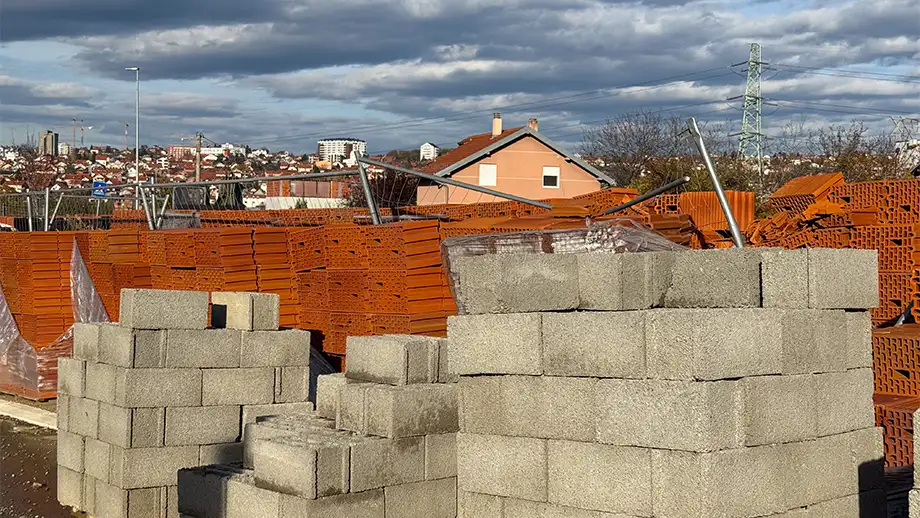
Newly-produced concrete slabs await at a construction site. Producing and using new concrete accounts for as much as 9 percent of global carbon emissions. But reusing precast structural elements minimizes waste, reduces emissions and preserves value. (Photo: Tatiana Chekryzhova)
<関連情報>
- https://www.kth.se/en/om/nyheter/centrala-nyheter/new-study-enables-safe-reuse-of-concrete-1.1453932
- https://link.springer.com/article/10.1617/s11527-025-02914-4
耐久性から循環性へ:循環型建築におけるコンクリートの耐用年数を確保し、再利用を可能にする From durability to circularity: ensuring service life and enabling reuse of concrete in circular construction
Arlind Dervishaj,Aapo Räsänen,Kjartan Gudmundsson & Jukka Lahdensivu
Materials and Structures Published:04 January 2026
DOI:https://doi.org/10.1617/s11527-025-02914-4
Abstract
Reusing reinforced concrete structures within a Circular Economy offers substantial environmental benefits, but requires reliable assessment of their remaining service life. Conventional approaches to concrete durability, based on prescriptive design parameters for new structures or carbonation depth measurements in existing ones, are insufficient to ensure reuse for an additional 50 or 100 years. This study addresses this gap by introducing a performance-based probabilistic framework for evaluating carbonation‑induced corrosion, tailored to circular construction. The study incorporates parametric analysis and probabilistic modeling of corrosion initiation and propagation phases, and assesses two precast concrete buildings located in Nordic climates. The study also examines how storage period before reuse, changes in exposure class after deconstruction, altered carbonation rates during a second service life, and repair interventions, affect service life. Monte Carlo simulations are used to estimate the total service life under various conditions, with outdoor carbonation rates reflecting typical Nordic exposures. Corrosion propagation is modelled following fib Model Code 2020 and fib Bulletin 112. The results demonstrate that reused concrete elements can achieve service lives comparable to new structures, provided that performance-based assessment and appropriate repair interventions are applied. The proposed framework supports data-driven decisions on service life, repair, and reuse strategies for structural concrete, considering exposure classes and performance. It can be complemented by non-destructive testing and durability indicators. It provides a scientific basis for extending the service life of reused concrete elements and supports design for circularity and resource efficiency, thereby advancing circular construction and the transition toward a sustainable built environment.

