2026-07-27 スウォンジー大学
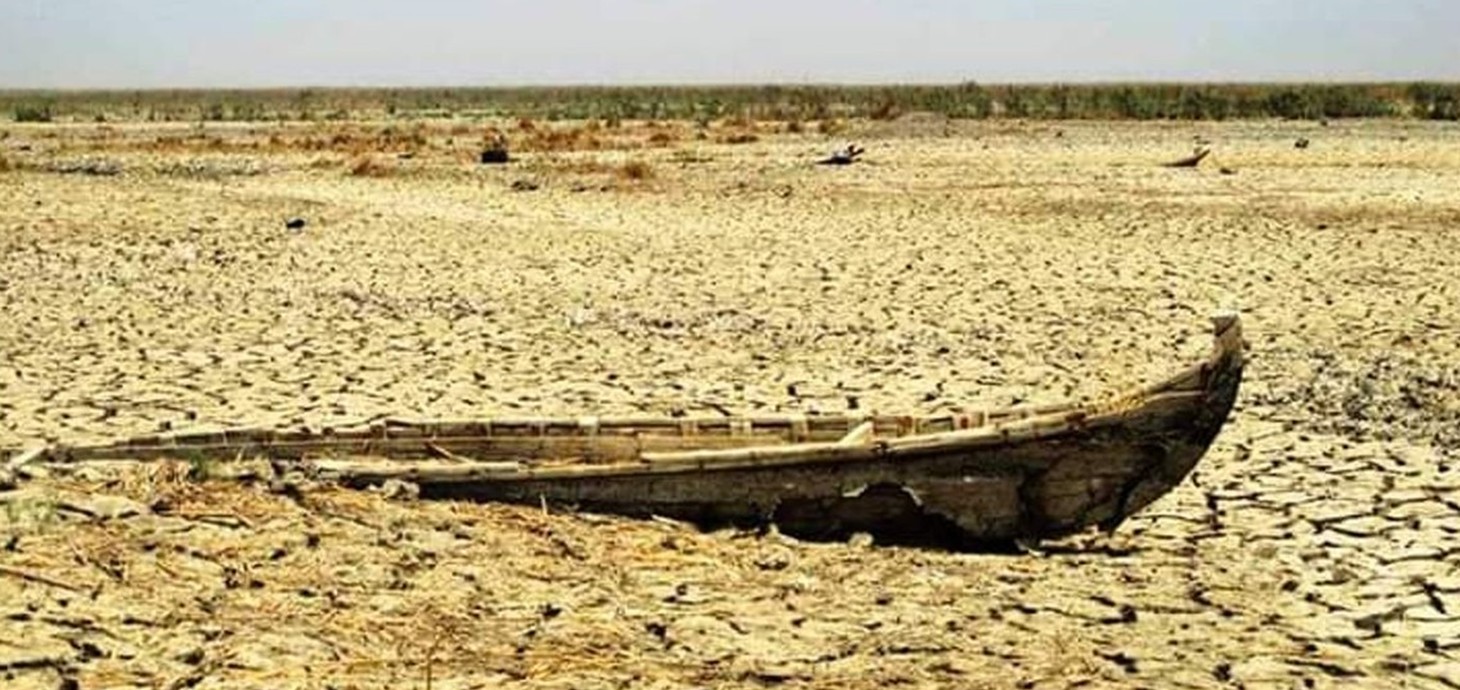
A boat stranded on dried-out marshland in the Mesopotamian Marshes, southern Iraq, due to drought.
<関連情報>
- https://www.swansea.ac.uk/press-office/news-events/news/2026/07/researchers-reveal-why-river-management-is-so-crucial-to-protecting-one-of-worlds-most-important-wetlands.php
- https://www.nature.com/articles/s41598-026-61808-9
2000年から2023年の期間における気候要因と地表水管理がメソポタミア湿地に与える影響 The impact of climate factors and surface water management on the Mesopotamian Marshes for the period 2000–2023
Akram Alqaraghuli,Peter North,Sietse Los,Iain Bye & Jacqueline Rosette
Scientific Reports Published:15 July 2026
DOI:https://doi.org/10.1038/s41598-026-61808-9 Unedited version
Abstract
The Mesopotamian Marshes, a UNESCO World Heritage site in southern Iraq, have experienced severe degradation due to climate change, upstream dam construction, and water management policies. This study quantifies the drivers of vegetation and water dynamics from 2000 to 2023 — a period spanning post-2003 restoration, the full MODIS record, and recent droughts. We integrated MODIS, Sentinel-2, JRC Global Surface Water, CHIRPS precipitation, and streamflow data, applying spectral indices (NDVI, MNDWI), regression, cross-correlation, hysteresis, partial correlation, and Mann-Kendall tests with Sen’s slope. Vegetation area ranged from 550 to 2,600 km², and water area from 100 to 1,650 km². Mann-Kendall analysis revealed that water area increased significantly (τ = 0.41, p < 0.01) with a Sen’s slope of 16.43 km² yr⁻¹, while vegetation showed a trend with a Sen’s slope of 36.60 km² yr⁻¹ (τ = 0.30, p = 0.05). Land Surface Temperature (LST) showed the strongest negative correlation with vegetation (R = − 0.87). Streamflow was the dominant predictor of vegetation area (p = 0.029, R = 0.81), while local precipitation had no significant effect. Cross-correlation showed that vegetation decline precedes temperature increases (R = − 0.74 at lag 1 year), confirming a positive feedback loop. Partial correlation confirmed vegetation’s independent cooling effect (P = − 0.82) beyond open water. Major water and vegetation losses occurred in 2008–2009 and 2022–2023, linked to upstream drought, dam operations, and water policies. We conclude that transboundary water management, not local rainfall, governs marshland sustainability. These findings provide quantitative evidence for policymakers to prioritize river flow allocation over local precipitation in arid-region wetland conservation.