
2026-04-08 ワシントン大学セントルイス校
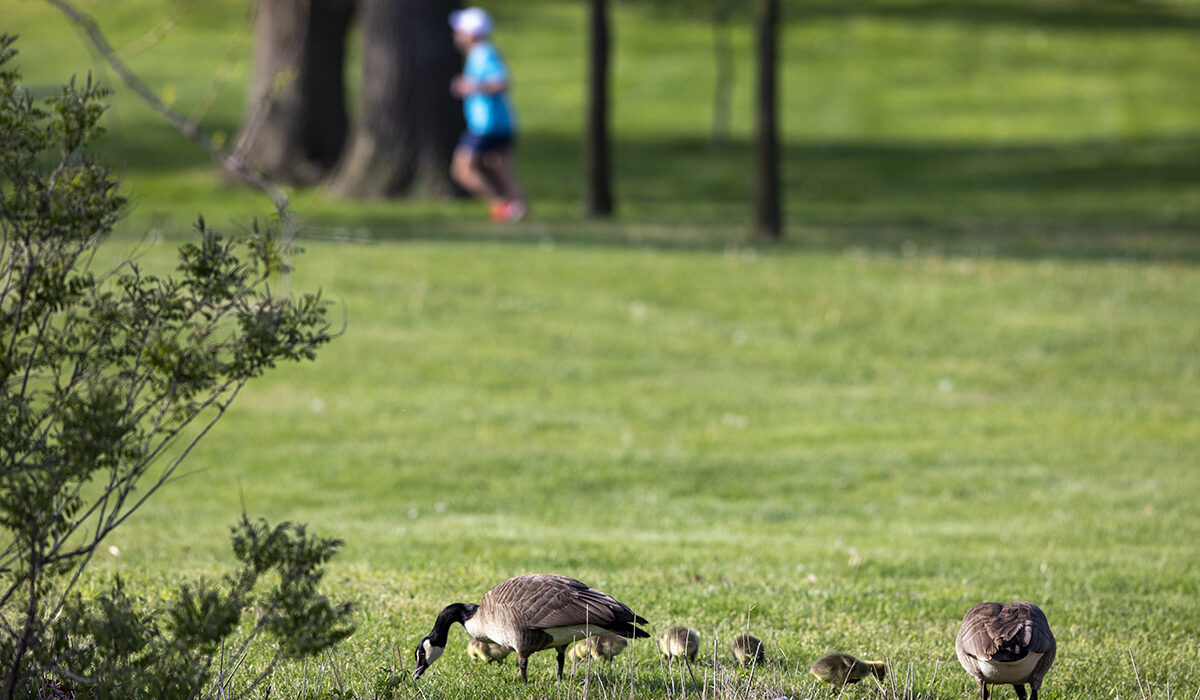
Forest Park is home to a variety of habitats that support diverse populations of bird species in the St. Louis region. (Photo: Joe Angeles/WashU)
<関連情報>
- https://source.washu.edu/2026/04/putting-the-forever-in-forest-park/
- https://esajournals.onlinelibrary.wiley.com/doi/10.1002/eap.70207
都市部の生息地再生により、米国中西部における在来鳥類の多様性が増加する Urban habitat restoration increases native bird diversity in the Midwestern United States
Stella F. Uiterwaal, August Wise, Misty Cain, Sharon L. Deem, Anthony Dell, Chris Ferree, Arina Martin, Randy L. Korotev, Jamie Palmer, Dave Tylka, Grace Witsken, Stephen Blake
Ecological Applications Published: 17 March 2026
DOI:https://doi.org/10.1002/eap.70207
Abstract
Urbanization is a key driver of biodiversity loss because infrastructure development replaces native habitats and remnant biodiversity becomes concentrated in fragmented, seminatural green spaces. Ecological restoration in urban areas can improve the quality of green spaces for native wildlife, but the impact of restorative management on biodiversity is often not quantified. Urban habitat management frequently involves integrating human needs such as recreational spaces with conservation aims, potentially altering the biodiversity benefits of these efforts. Furthermore, non-native species can dominate urban biodiversity, suggesting that high biodiversity in city green spaces may not be indicative of diverse native communities. Here, we use point count surveys to explore whether restoration efforts can explain variation in avian biodiversity across time and space in a large urban greenspace, Forest Park in St. Louis, Missouri, USA. First, we use surveys conducted during three distinct restoration phases spanning almost three decades to explore longitudinal effects of restoration on Shannon diversity and species richness. Second, we use data from 2023 to 2024 to explore whether variation in restoration status can explain avian biodiversity across sites. Lastly, we assess the contribution of non-native bird species to avian biodiversity. We demonstrate that restoration efforts are linked to increased diversity, but that this effect is more pronounced across a spatial rather than a temporal restoration gradient. We also show that non-native species contribute less to richness in more restored areas, but that restoration has no effect on the contribution of non-native species to Shannon diversity. We show that an urban restoration program can increase native biodiversity. We further provide insights to inform future habitat restoration efforts in cities, underscoring the importance of restoration efforts that consider landscape heterogeneity and water availability. Restoration may be most impactful in areas with limited landscape heterogeneity and water availability, and addressing these limitations may help maximize biodiversity increases. In addition, focusing on areas which already have diverse habitats and plentiful water could help reinforce existing biodiversity patterns. Our findings highlight how restoration efforts can benefit native avian biodiversity even in a multiuse urban park, with positive implications for management of biodiversity in urban greenspaces.

